

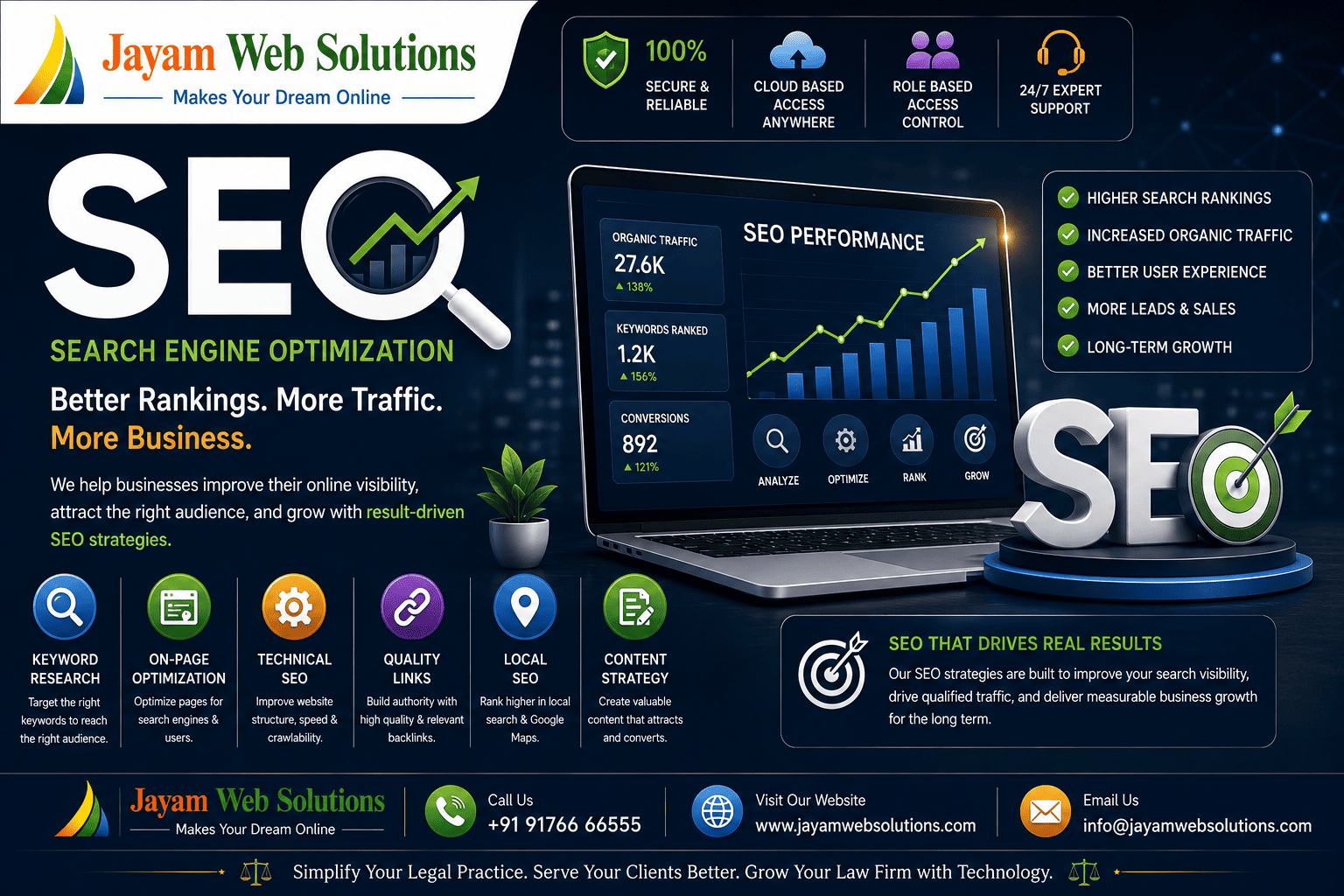
SEO: The Complete Guide to Search Engine Optimization for Businesses
In today's digital environment, having a website is only the beginning of building an online presence. A professionally designed website can represent your brand, showcase your services, and provide valuable information to customers, but it still needs to be discovered by the right audience. This is where Search Engine Optimization (SEO) becomes important.
SEO is the process of improving a website so that search engines can better understand its content and users can easily find relevant information. When implemented properly, SEO can help businesses improve their visibility in search results, attract relevant visitors, generate enquiries, and establish a stronger digital presence.
What Is SEO?
Search Engine Optimization, commonly known as SEO, is a collection of strategies and techniques used to improve a website's visibility in organic search results.
When people search for products, services, businesses, or answers online, search engines evaluate numerous factors to determine which pages should appear for those queries. SEO helps businesses create websites and content that are easier for search engines to understand and more useful for visitors.
SEO can involve several areas, including:
- Keyword research
- On-page optimization
- Technical SEO
- Content optimization
- Website performance
- Mobile responsiveness
- Internal linking
- Local SEO
- Structured data
- Website architecture
- Search intent optimization
- Authority and reputation building
The objective is not simply to obtain higher rankings. Effective SEO should attract the right visitors and help turn relevant traffic into enquiries, customers, or other valuable actions.
Why Is SEO Important for Businesses?
Consumers increasingly use search engines when researching products, services, companies, and solutions. If your website does not appear when potential customers search for relevant terms, competitors may receive those opportunities instead.
A strong SEO strategy can help businesses:
- Increase organic website traffic
- Improve online visibility
- Reach potential customers
- Generate qualified enquiries
- Build brand credibility
- Improve website usability
- Support long-term digital growth
- Reduce dependence on paid advertising
- Strengthen local search presence
Unlike a short-term promotional campaign, SEO can continue generating value when a website consistently provides useful content and maintains a technically sound foundation.
How Does SEO Work?
Search engines use automated systems to discover, understand, evaluate, and organize web pages.
While the exact systems and ranking processes are complex and continually evolving, businesses can improve their search presence by following fundamental SEO principles.
A successful strategy generally focuses on three major areas:
1. Technical SEO
Technical SEO focuses on the technical foundation of a website.
This may include:
- Website speed
- Mobile usability
- Crawlability
- Indexing
- Site architecture
- XML sitemap
- Robots.txt
- HTTPS security
- Canonical URLs
- Redirect management
- Structured data
- Core Web Vitals
- Broken links
A technically healthy website gives search engines a clearer understanding of its pages and helps users navigate the website more effectively.
2. On-Page SEO
On-page SEO focuses on optimizing the content and elements of individual web pages.
Important elements include:
- Page titles
- Meta descriptions
- Headings
- URL structure
- Keyword usage
- Content quality
- Image optimization
- Image alt text
- Internal links
- Content structure
- Search intent
The goal is to make every page relevant, useful, readable, and clearly focused on its intended topic.
3. Off-Page SEO
Off-page SEO involves activities outside your own website that can contribute to your website's authority and visibility.
This can include:
- Relevant backlinks
- Digital PR
- Brand mentions
- Business listings
- Industry references
- Local citations
- Content promotion
Quality and relevance are more important than simply collecting a large number of links.
What Is Keyword Research?
Off-page SEO involves activities outside your own website that can contribute to your website's authority and visibility.
For example, a website development company may target keywords such as:
- Website Development Company
- Custom Website Development
- Web Application Development
- E-commerce Website Development
- Website Design Company
However, selecting keywords should not be based only on search volume. Businesses should also consider search intent, relevance, competition, location, and the likelihood that the keyword can attract potential customers.
Understanding Search Intent
Search intent refers to the reason behind a user's search.
A person searching "what is SEO" may be looking for information.
Someone searching "SEO services for small business" may be evaluating service providers.
Another person searching "SEO company in Chennai" may already be looking for a company to contact.
Understanding these differences helps businesses create the right content for each stage of the customer journey.
SEO for Business Websites
Business websites should be optimized around the products, services, locations, industries, and customer problems they address.
A strong business SEO strategy may include dedicated service pages, location pages, informative blog articles, case studies, FAQs, and optimized conversion paths.
For example, a web development company can create separate pages for:
- Custom Web Development
- E-commerce Development
- Web Application Development
- Mobile Application Development
- CMS Development
- Website Maintenance
- SEO Services
Each page can target a specific search intent rather than attempting to rank one page for every keyword.
Local SEO
Local SEO is particularly important for businesses that serve customers in specific cities or geographical areas.
A local SEO strategy may involve:
- Google Business Profile optimization
- Local keyword targeting
- Consistent business information
- Location-specific website content
- Customer reviews
- Local citations
- Location pages
- Relevant local references
For example, a company serving Chennai may optimize its website for relevant Chennai-based searches while maintaining useful and natural content.
Why Content Matters in SEO
Content plays an important role in helping search engines understand a website and helping users find useful answers.
However, publishing large quantities of repetitive articles is not an effective long-term strategy.
Good SEO content should:
- Address a genuine user need
- Provide useful information
- Match search intent
- Demonstrate subject knowledge
- Be easy to read
- Use keywords naturally
- Include appropriate internal links
- Encourage meaningful user actions
Businesses should focus on creating content that is genuinely useful rather than simply writing articles to insert keywords.
SEO and Website Performance
Website performance can significantly influence user experience.
Slow pages can frustrate visitors and may contribute to users leaving a website before completing an important action.
SEO-friendly development should therefore consider:
- Page loading performance
- Image compression
- Efficient code
- Browser caching
- Responsive design
- Mobile performance
- Server performance
- Core Web Vitals
SEO should ideally be considered during website development rather than added only after the website has been launched.
SEO-Friendly Website Development
A website developed with SEO in mind can provide a stronger foundation for future optimization.
Important considerations include:
- Clean URL structures
- Proper heading hierarchy
- Crawlable navigation
- Responsive layouts
- Fast-loading pages
- Editable meta information
- Canonical URL controls
- XML sitemap generation
- Schema implementation
- Redirect management
- SEO-friendly content management
This is particularly important for businesses planning a new website or redesigning an existing one.
Common SEO Mistakes Businesses Should Avoid
Businesses often make SEO mistakes that can limit their website's potential.
Some common problems include:
- Keyword Stuffing
- Repeating the same keyword excessively can make content unnatural and reduce its usefulness.
- Duplicate Content
- Using substantially identical content across multiple pages can make it difficult for search engines to determine which page should be prioritized.
- Ignoring Mobile Users
- A website that works poorly on smartphones can provide a poor user experience.
- Slow Website Performance
- Large images, inefficient code, poor hosting, and unnecessary scripts can affect page performance.
- Missing Page Titles and Meta Descriptions
- Important pages should have clear and relevant metadata.
- Poor Internal Linking
Important pages should be connected through logical internal links so users and search engines can discover related content.
Creating Content Without Search Intent
A page may contain the right keywords but still fail to satisfy what users are actually looking for.
How Long Does SEO Take to Show Results?
SEO is generally a long-term marketing activity rather than an instant solution.
The time required to see meaningful results depends on factors such as:
- Website age
- Existing authority
- Competition
- Industry
- Target keywords
- Content quality
- Technical condition
- Backlink profile
- Website history
- Consistency of optimization
Businesses should therefore evaluate SEO using multiple indicators rather than expecting immediate ranking changes.
How to Choose an SEO Company
Businesses considering professional SEO services should evaluate more than pricing.
Important factors include:
- Relevant industry experience
- SEO methodology
- Technical SEO capabilities
- Content strategy
- Keyword research process
- Reporting practices
- Communication
- Transparency
- Previous project experience
- Understanding of business objectives
A reliable SEO partner should be able to explain what is being optimized, why it matters, and how progress will be measured.
SEO and Business Growth
The ultimate purpose of SEO should be business growth rather than rankings alone.
Higher visibility becomes valuable when it brings relevant visitors who engage with your website and take meaningful actions.
Depending on the business, these actions may include:
- Enquiry submissions
- Phone calls
- Product purchases
- Appointment bookings
- Account registrations
- Downloads
- Quote requests
- Newsletter subscriptions
SEO should therefore be connected to broader digital marketing and conversion goals.
Conclusion
Search Engine Optimization is an important component of a successful digital strategy. By combining technical optimization, useful content, relevant keyword targeting, strong website architecture, local optimization, performance improvements, and a focus on user experience, businesses can build a stronger foundation for organic search visibility.
SEO is not simply about reaching the first position on a search results page. It is about helping the right audience discover your business, providing useful information, building trust, and creating opportunities for sustainable growth.
For businesses planning a new website, redesign, or long-term digital strategy, incorporating SEO from the beginning can provide a significant advantage.
Visit us at www.jayamwebsolutions.com to get started!