

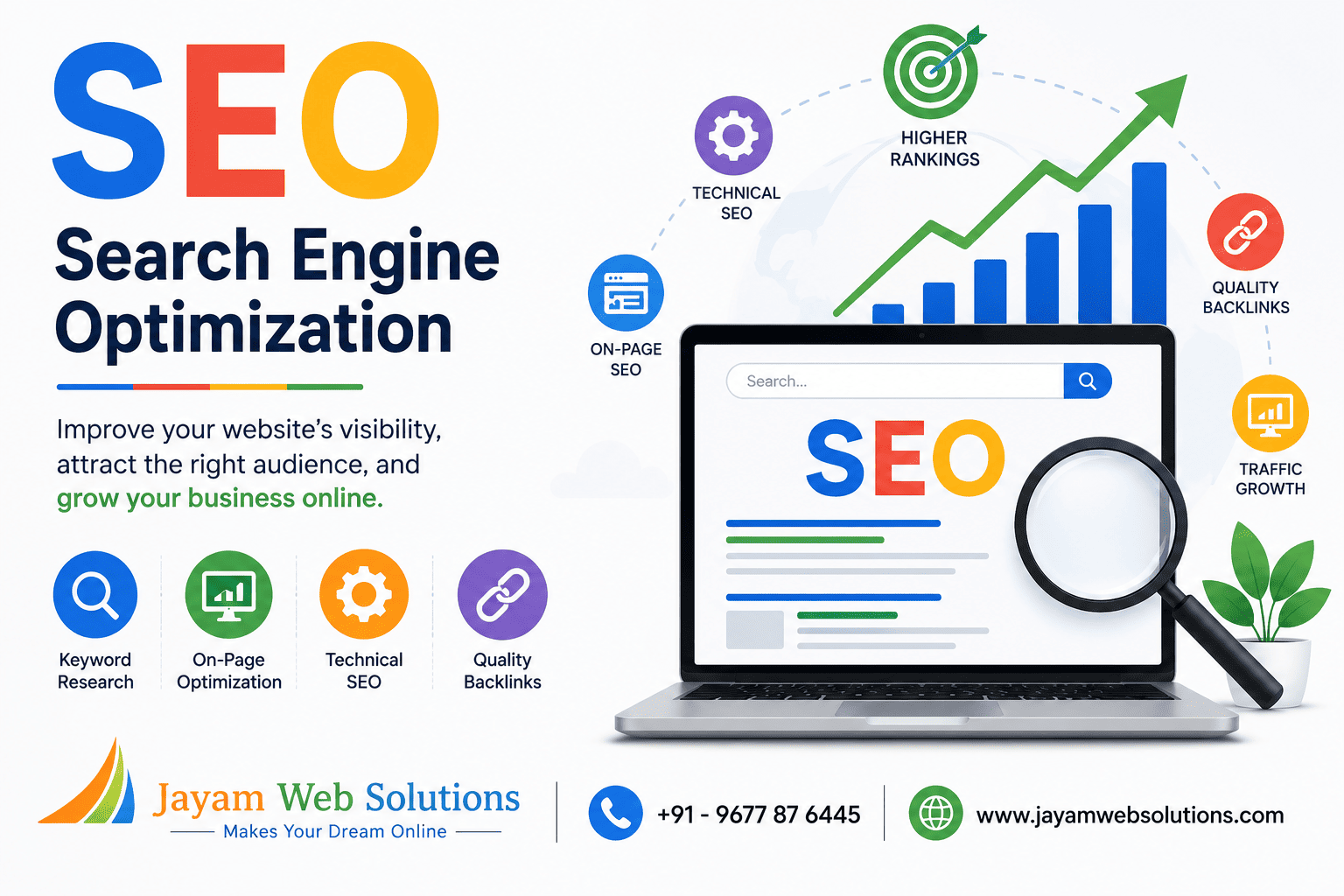
SEO: The Complete Guide to Search Engine Optimization for Businesses
Introduction
In today's competitive digital landscape, having a website alone is no longer enough. Millions of websites compete for attention every day, making it increasingly difficult for businesses to stand out online. This is where Search Engine Optimization (SEO) becomes an essential part of your digital marketing strategy.
Search Engine Optimization is the process of improving your website's visibility on search engines like Google, Bing, and Yahoo. When your website ranks higher in search results, potential customers can easily find your products or services, resulting in increased website traffic, brand awareness, and business growth.
Whether you own a startup, a small business, or a large enterprise, investing in SEO can provide long-term benefits that paid advertising alone cannot achieve. A well-planned SEO strategy helps attract quality visitors, improve user experience, and generate qualified leads without relying entirely on paid campaigns.
At Jayam Web Solutions, we help businesses improve their online presence through professional SEO Services, modern Website Development Services, and result-driven Digital Marketing Services. By combining technical expertise with proven SEO strategies, we help businesses achieve sustainable online growth.
In this complete guide, you'll learn everything about Search Engine Optimization, including how search engines work, the different types of SEO, keyword research, on-page optimization, technical SEO, local SEO, content strategies, and the latest best practices that can help improve your website's rankings.
1. What is Search Engine Optimization (SEO)?
Search Engine Optimization (SEO) is the practice of optimizing your website to improve its visibility in organic search engine results. Unlike paid advertising, SEO focuses on attracting visitors naturally by making your website more relevant, useful, and authoritative.
When someone searches for products or services related to your business, search engines analyze thousands of websites before deciding which pages deserve the highest rankings. SEO helps search engines understand your website so it can appear for relevant searches.
A successful SEO strategy involves optimizing several aspects of your website, including content, keywords, page speed, mobile responsiveness, internal linking, image optimization, and technical performance.
For example, if you provide Website Design Services, your website should clearly explain your services, include relevant keywords, and offer valuable information that matches what users are searching for.
The better your website satisfies user intent, the greater your chances of achieving higher rankings on search engines.
2. Why is SEO Important for Businesses?
Many customers begin their buying journey by searching online. Whether they need a website, digital marketing assistance, or software development services, search engines are usually the first place they look.
Without proper SEO, your website may never appear in front of potential customers, allowing competitors to capture valuable traffic and leads.
Some of the major benefits of Search Engine Optimization include:
- Increased website visibility
- Higher organic traffic
- Better brand credibility
- Improved customer trust
- More qualified leads
- Higher conversion rates
- Long-term return on investment
- Better user experience
Unlike paid advertising, SEO continues to generate results over time. Once your website earns strong rankings, it can consistently attract visitors without requiring continuous advertising expenses.
Businesses that invest in professional Local SEO Services can also reach nearby customers who are actively searching for products and services in their location, making SEO one of the most cost-effective digital marketing investments available today.
3. How Do Search Engines Work?
Understanding how search engines work is the foundation of every successful SEO strategy.
Search engines like Google use automated programs called crawlers or spiders to discover and organize information across billions of web pages.
The process generally consists of three stages:
Crawling
Search engine bots continuously scan websites by following links from one page to another. Every time you publish new content or update existing pages, these bots revisit your website to discover the latest information.
Having proper website navigation and effective internal linking helps search engines crawl your website more efficiently.
For example, linking your blog articles to your Website Development Services page or Contact Us page allows search engines to discover important pages more easily.
Indexing
After crawling your website, search engines analyze the content and store it in their index.
During indexing, Google evaluates:
- Page content
- Images
- Headings
- Keywords
- Meta tags
- Structured data
- Mobile friendliness
- Website speed
If your pages are properly optimized, they have a much higher chance of appearing in search results.
Ranking
When users search for something online, Google's algorithm compares millions of indexed pages and determines which results are the most relevant.
Ranking depends on hundreds of factors, including:
- Content quality
- Keyword relevance
- Website authority
- User experience
- Mobile responsiveness
- Backlinks
- Technical SEO
- Page loading speed
- Internal linking structure
This is why businesses should regularly publish informative content, optimize existing pages, and continuously improve their website performance.
Visit us at www.jayamwebsolutions.com to get started!
Kindly Reach us / Call us +91 9677876445