

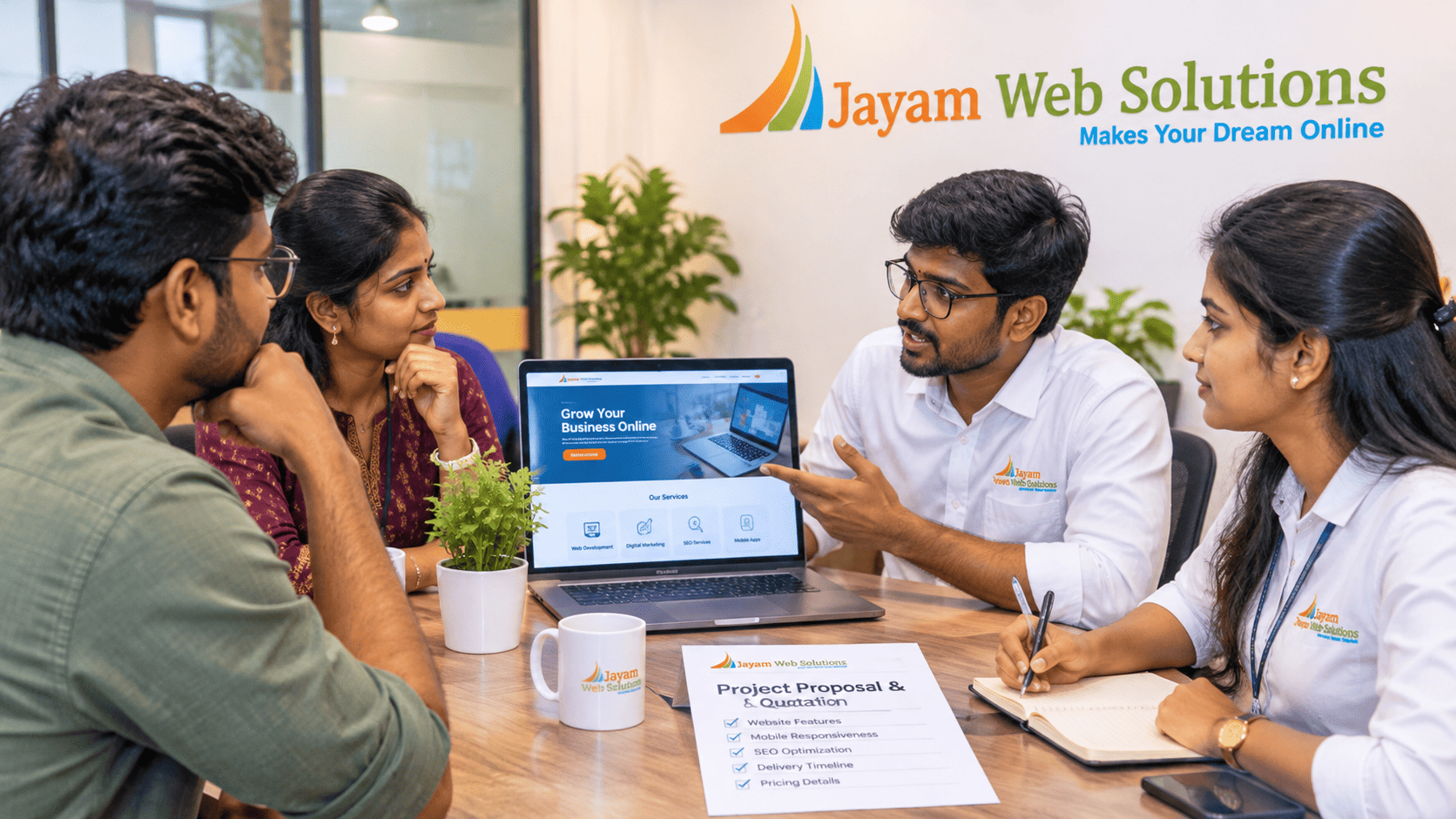
How to Choose the Best Website Development Company in India in 2026
A business website is often the first place where potential customers learn about a company's products, services and credibility. It can help generate enquiries, explain business offerings, showcase completed work and support customer communication. For many businesses, the website also becomes an important part of their sales and marketing activities.
Choosing the right website development company is therefore an important business decision. The company you select should understand your requirements, recommend a suitable technical approach and deliver a website that supports your actual business activities.
India has many web development agencies, software companies and independent developers offering different types of services. Their pricing, technical capabilities, development processes and support arrangements can vary considerably.
So, how do you identify a suitable development partner?
This article explains the important points to examine before selecting a website development company in India in 2026.
1. Understand Your Website Requirements Before Contacting a Company
Before approaching a website development company, identify what you expect your website to accomplish.
A business website can serve different purposes depending on the organisation. One company may need a simple website to present its services, while another may require product catalogues, customer accounts, online payments or administrative features.
Start by identifying the type of website you need.
|
Website Type |
Main Purpose |
|
Static Website |
Present business information and services |
|
Dynamic Website |
Allow website content to be updated through an admin panel |
|
Corporate Website |
Establish the company's online presence and communicate its offerings |
|
E-commerce Website |
Display products and accept online orders |
|
Web Application |
Perform specific business operations through online software |
|
Booking Website |
Allow customers to check availability and make bookings |
Prepare a list of the pages, features and functions required for your project.
For example, a manufacturing company may need product categories, technical specifications, enquiry forms and downloadable catalogues. An online store may require product management, shopping cart functionality, payment integration, order management and delivery settings.
Having a clear requirement list helps the development company understand the project and provide a more relevant estimate.
2. Examine the Company's Experience and Project Portfolio
A company's project portfolio provides useful information about the type of websites it has handled.
Do not evaluate a development company only by the number of years it has been operating. Look at the actual work completed and check whether its experience matches your requirements.
Consider the following:
- Has the company developed websites for businesses similar to yours?
- Does its portfolio include dynamic websites or only basic informative websites?
- Has it handled e-commerce projects?
- Can it develop customised functionality?
- Are the displayed websites working properly?
- Do the websites provide a good experience on mobile devices?
Visit a few websites from the company's portfolio rather than relying only on screenshots.
Check the navigation, page loading, content presentation, forms and mobile layout. This gives you a better understanding of the company's practical development capabilities.
A development company that has handled different project requirements may also be better equipped to identify possible challenges before development begins.
3. Check the Technical Skills and Development Approach
The technology used for a website should be selected according to the project's requirements.
Different projects need different development approaches. A basic company website may not require the same architecture as a large e-commerce platform or a business management application.
Ask the company about its development technologies and how they will be used in your project.
Some commonly used technologies include:
|
Technology |
Common Applications |
|
HTML, CSS and JavaScript |
Website structure, styling and interactive features |
|
React.js |
Interactive user interfaces and web applications |
|
Next.js |
React-based websites and applications with server-side rendering and other rendering options |
|
PHP and Laravel |
Dynamic websites, backend systems and customised applications |
|
Node.js |
Backend services, APIs and real-time applications |
|
MongoDB |
Database management for applications using document-based data |
|
MySQL |
Relational database management |
The important point is not whether a company uses a particular technology simply because it is popular.
The selected technology should suit your website's expected traffic, functionality, maintenance requirements, future expansion and available budget.
A professional development team should be able to explain why a particular technology is suitable for your project in understandable terms.
4. Confirm Whether the Company Can Provide Custom Development
Not every business requirement can be handled by a standard website layout.
Some companies need features designed around their internal processes. These may include customer dashboards, quotation generation, employee management, product configuration, booking workflows, inventory tracking and reporting.
Before finalising a development company, find out whether it can build customised functionality.
Ask questions such as:
- Can new features be added based on our business requirements?
- Can the admin panel be customised?
- Can the website connect with external services through APIs?
- Can user roles and access permissions be configured?
- Can the application be expanded when the business grows?
A company with custom development capabilities can help when your requirements go beyond ordinary website pages.
For example, a distributor may need a product catalogue with an enquiry-based ordering process rather than a conventional online shopping cart. A hotel may require room booking, guest management and combined room and restaurant billing.
The development approach should reflect the way the business actually operates.
5. Evaluate Website Design and Mobile Responsiveness
A website should present business information clearly and allow visitors to find what they need without unnecessary effort.
An attractive design alone is not enough. The layout should also support navigation, readability and enquiry generation.
Review these aspects when evaluating a company's design work:
- Clear presentation of products and services
- Consistent colours, fonts and visual elements
- Easy-to-understand navigation
- Proper spacing between content sections
- Readable text and suitable image sizes
- Clearly visible contact information
- Convenient enquiry forms and call-to-action sections
Mobile responsiveness is equally important.
Visitors may access your website using mobile phones, tablets, laptops and desktop computers. The layout should adjust to different screen sizes without hiding important information or making navigation difficult.
Check whether the company tests its websites across different screen sizes and browsers.
A well-designed website should remain convenient to use regardless of the device selected by the visitor.
6. Ask About SEO-Friendly Website Development
Search engine optimisation should be considered during website development rather than treated as an activity that begins only after launch.
A website's technical structure and content organisation can influence how search engines discover and understand its pages.
Ask the development company whether the website will include the necessary technical SEO features.
Important areas include:
- Editable page titles and meta descriptions
- Proper heading structure
- Search-engine-friendly URLs
- Image alternative text
- XML sitemap generation
- Robots.txt configuration
- Canonical URL support where required
- Mobile-friendly page layouts
- HTTPS security
- Appropriate internal linking
- Structured data when relevant and supported by the page content
Also ask whether the website can be connected to Google Search Console and analytics tools.
Remember that an SEO-friendly website does not automatically achieve top positions in Google. Search visibility also depends on content quality, competition, relevance, authority and ongoing optimisation.
The development company should explain what is included in the website's technical SEO setup and what requires a separate SEO service.
7. Understand the Website Development Process
A clearly defined development process helps both the customer and the development team understand how the project will move forward.
Before confirming the project, ask how the company manages the work from the initial discussion to final delivery.
A typical website development process may include the following stages:
Requirement Discussion
The team collects information about the business, target audience, required pages, features and project expectations.
Quotation and Scope Confirmation
The company prepares the estimated cost, delivery schedule, included features and project terms.
Design Preparation
The website layout, colour scheme, page structure and visual presentation are planned.
Development
The approved design and functionality are implemented using the selected technologies.
Content Integration
The business provides or approves the text, images, product details and other required information for the website.
Testing
The development team checks links, forms, page layouts, mobile responsiveness, functionality and other important areas.
Customer Review
The customer reviews the website and shares corrections or changes within the agreed project scope.
Deployment
After approval, the website is configured on the production server and made accessible through the domain name.
Post-Launch Support
The company explains the available support arrangements, maintenance responsibilities and future update process.
A written project scope is particularly important. It helps prevent confusion about what is included in the agreed development cost.
8. Compare Website Development Cost and Quotation Details
Website development pricing in India varies according to the type of website, number of pages, design requirements, custom functionality, integrations and technical complexity.
A low quotation does not necessarily mean better value. Similarly, a higher quotation should be supported by a clear explanation of the work involved.
When comparing estimates, examine the details rather than comparing only the final amount.
Check whether the quotation includes:
|
Cost Component |
What to Check |
|
Design |
Number of pages and design customisation |
|
Development |
Included pages, modules and functionality |
|
Admin Panel |
Content management and administrative features |
|
Responsive Layout |
Mobile, tablet and desktop compatibility |
|
SEO Setup |
Technical SEO features included in the project |
|
Domain |
Registration charges and renewal responsibility |
|
Hosting |
Server type, storage, resources and renewal cost |
|
SSL |
HTTPS certificate arrangements |
|
|
Business email account setup, if required |
|
Maintenance |
Updates, troubleshooting and support terms |
Also clarify whether taxes, third-party subscriptions, payment gateway charges and external API costs are included or charged separately.
Ask for a written quotation that clearly describes the deliverables.
This makes it easier to compare different companies and understand the actual value being offered.
9. Clarify Website Ownership and Access
Website ownership is an important subject that should be discussed before development starts.
After project completion, the business should understand who controls the domain, hosting account, source code and other essential resources.
Clarify the following points:
- Who will register and own the domain name?
- Who will have access to the hosting account?
- Will the customer receive the website source code as agreed?
- Will administrator login credentials be provided?
- Can the website be moved to another hosting provider?
- Are any third-party licences or subscriptions involved?
- Are there restrictions on transferring or modifying the website?
The exact ownership and handover terms should be documented in the project agreement or quotation.
Having clarity on these matters helps the business manage its website independently and reduces complications if it changes its service provider in the future.
10. Check Hosting, Security and Backup Arrangements
Website development and website hosting are connected, but they are not the same service.
Some development companies provide hosting as part of their services, while others deploy websites on hosting accounts selected by the customer.
Before choosing a company, understand how the website will be hosted and maintained.
Important questions include:
- Which hosting environment will be used?
- Is the server suitable for the website's requirements?
- How are SSL certificates configured?
- Are regular backups available?
- How are website updates and security issues handled?
- Who is responsible for server-level maintenance?
- What happens if the website becomes unavailable?
Security and backup arrangements should be discussed according to the nature of the website.
For example, an e-commerce website that processes orders and customer information may require more careful access control, backup planning and security monitoring than a small informative website.
Do not assume that every hosting plan provides the same resources or backup facilities. Ask for the actual service details.
11. Evaluate Customer Communication and Project Management
Technical knowledge is only one part of successful website development.
The company should also be able to understand your requirements, explain technical decisions and keep you informed about project progress.
During the initial discussions, observe how the team handles your questions.
Consider these points:
- Do they understand the business requirements?
- Do they explain technical matters clearly?
- Is there a designated person for project communication?
- Do they provide updates during development?
- Are changes and additional requirements documented?
- Is there a clear process for customer feedback?
- Do they explain delays or technical limitations properly?
A project can become difficult to manage when communication is unclear.
Choose a company that treats requirement discussions, progress updates and customer feedback as important parts of the development process.
12. Understand Maintenance and Support After Website Launch
A website may require changes even after it becomes live.
Business contact details can change, new services may be introduced, product information may need updating and technical issues may occasionally arise.
Before selecting a website development company, understand the support available after delivery.
Ask whether the company provides:
- Website content updates
- Bug fixing
- Technical troubleshooting
- Hosting support
- Domain and SSL renewal assistance
- Website backup services
- Security-related updates
- New page creation
- Additional feature development
Also clarify the support period included in the project cost and the charges applicable after that period.
Website maintenance should not be confused with unlimited development work. Small corrections, regular maintenance and major new features may be handled under different pricing arrangements.
A clear support agreement helps both parties understand their responsibilities.
13. Watch Out for Common Mistakes When Selecting a Development Company
Businesses sometimes finalise a development company without examining the project details carefully.
Avoid these common mistakes:
Selecting Only Based on the Lowest Price
A low quotation may exclude important features, support or technical requirements. Review the deliverables before making a decision.
Not Checking Previous Projects
A company portfolio can help you assess its work. Visit the actual websites and examine their functionality.
Ignoring Mobile Responsiveness
A website that looks acceptable on a desktop may not provide the same experience on a mobile phone.
Assuming SEO Is Automatically Included
Ask which technical SEO features are part of the development package and which services are charged separately.
Not Confirming Source Code and Ownership
Clarify the ownership, access and handover conditions before signing the agreement.
Leaving Requirements Unclear
A project without a properly documented scope can lead to misunderstandings about cost, delivery and functionality.
Ignoring Future Support
Understand who will handle updates, maintenance and technical problems after the website is launched.
Making a careful selection at the beginning can reduce avoidable issues during and after development.
14. Questions to Ask Before Finalising a Website Development Company
Use the following checklist when discussing your project with potential development partners.
|
Question |
Why It Matters |
|
Have you handled similar projects? |
Helps assess relevant experience |
|
Which technology will you use? |
Clarifies the technical approach |
|
Can you develop customised features? |
Confirms whether special requirements can be handled |
|
Is mobile responsiveness included? |
Ensures compatibility across devices |
|
What SEO features are included? |
Clarifies the technical SEO scope |
|
What is the estimated delivery time? |
Helps plan the project |
|
What exactly is included in the quotation? |
Avoids unexpected costs |
|
Who owns the source code and domain? |
Establishes ownership and access |
|
What support is available after launch? |
Clarifies post-delivery responsibilities |
|
Are hosting and renewal charges separate? |
Helps calculate recurring expenses |
Do not hesitate to ask these questions. A professional development company should be able to explain its process and project terms clearly.
15. Why Choose a Website Development Company That Understands Business Requirements?
A website should do more than display information. It should help the business communicate with customers and support its day-to-day objectives.
For example:
- A service provider may need enquiry forms and service-specific landing pages.
- A manufacturer may need product catalogues and technical information.
- A retailer may require online ordering and payment facilities.
- A hotel may need room booking and billing functionality.
- A professional organisation may require member registration and user dashboards.
The development partner should understand the purpose behind each feature instead of simply adding functions without considering how they will be used.
This is why requirement analysis is an important part of website development.
When the company understands your business operations, it becomes easier to plan the page structure, functionality and future improvements.
Frequently Asked Questions (FAQs)
1. How do I choose the best website development company in India?
Check the company's portfolio, technical experience, development process, pricing details, customisation capabilities, website ownership terms and post-launch support. Select a company that understands your requirements and can explain its proposed solution clearly.
2. How much does it cost to develop a website in India in 2026?
The cost depends on the website type, number of pages, design complexity, custom features, integrations and hosting requirements. A basic informative website and a customised e-commerce platform will have different development costs. Request a detailed quotation based on your actual requirements.
3. How long does website development take?
The development period depends on the project's scope, design approval, content availability and functionality. A simple business website generally requires less development time than an e-commerce website or a customised web application.
4. What should be included in a website development quotation?
A quotation should explain the included pages, design work, functionality, admin panel requirements, responsive development, technical SEO features, testing, deployment and support terms. Domain, hosting, email and third-party service charges should also be clarified.
5. Is custom website development better for businesses?
Custom development can be suitable when a business needs specific workflows, customised features, user roles or integrations. The right approach depends on the business requirements, available budget and expected future changes.
6. Will my website be mobile-friendly?
Ask the development company to confirm that responsive development is included. The completed website should be tested on different screen sizes to ensure that content, navigation, forms and other features work properly.
7. Does website development include SEO?
Website development can include technical SEO elements such as editable meta information, heading structure, sitemap configuration, mobile responsiveness and search-friendly URLs. Content optimisation, link building and ongoing SEO campaigns may be separate services.
8. Who will own my website after development?
Ownership depends on the agreement between the customer and the development company. Before starting the project, clarify the terms for domain ownership, hosting access, source code delivery, administrator credentials and third-party licences.
9. Do I need website maintenance after launch?
Maintenance helps keep website content, software components, backups and technical settings up to date. The type and frequency of maintenance depend on the website's technology and functionality.
10. Can I add new features to my website later?
Yes, provided the website's architecture and technology support the required changes. Discuss future expansion during the planning stage so the development team can consider it while selecting the technical approach.
Conclusion
Choosing the best website development company in India in 2026 requires more than comparing quotations or looking at attractive website designs.
Examine the company's project experience, technical capabilities, custom development skills, design quality, SEO approach, development process, ownership terms and post-launch support.
Most importantly, select a development partner that understands what your business needs from its website.
A properly planned website can support your online presence, make business information accessible and provide a foundation for future digital activities. Taking time to evaluate the development company before starting the project can help you make a more informed decision.
Looking for a Website Development Company in India?
Jayam Web Solutions provides website development and customised web application development services for businesses.
Our services include:
- Static and dynamic website development
- Corporate and business website development
- E-commerce website development
- Custom web application development
- Responsive website design
- Website redesign and development
- Domain registration and web hosting
- Business email solutions
We focus on understanding business requirements and providing suitable web solutions based on the project's scope and objectives.
Jayam Web Solutions – Makes Your Dream Online
Website: https://www.jayamwebsolutions.com
Contact us to discuss your website requirements.